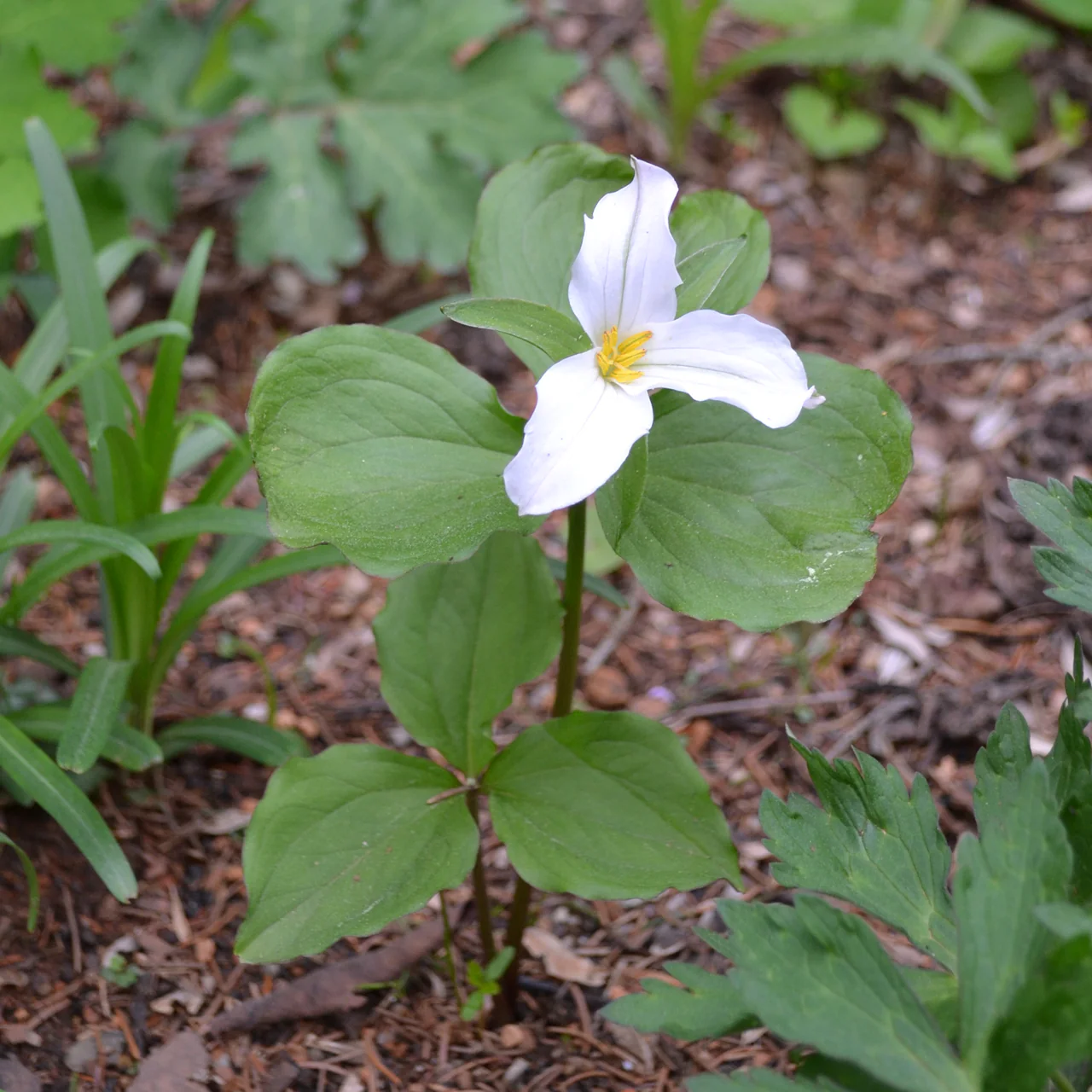
Bare Root White Trillium, Wake-Robin (Trillium grandiflorum)
Herbaceous, North American perennial
Description: White showy blossoms in early spring
Habit: Grows 12 to 16 inches high
Culture: Prefers moist, well-drained soils with a neutral to slightly acid pH; plant rhizomes 4 inches deep in a shady location; add organic matter or aged manure and mulch with well-rotted leaves
Hardiness: Cold hardy to USDA Zone 4
Trilliums are one of the most spectacular wildflowers of the eastern deciduous forest. Eighteenth-century plant explorers sent many species to Europe where the eminent Swedish taxonomist, Carl Linnaeus, classified them. American naturalist John Clayton included Trilliums in his Flora Virginica, published in 1739, a text in Jefferson's library. Like all members of the Lily family, the flower parts are in "threes."
This plant will ship bare root.Grade: #1.
Bare root planting tips:
~ If you can't plant immediately, store your plant in a cool location and keep the roots moist or pot in a container with a nursery potting mix from your local garden center.
~ Before planting, let the roots soak for several hours as you prepare the site. You'll want to dig a large enough hole so the root mass can spread out and the plant is at the same soil level as when it was growing in the nursery.
~ Once planted, water it in well and wait a month before fertilizing. Mulching will help to maintain moisture and raise soil temperatures for faster growth.
Bare Root White Trillium, Wake-Robin (Trillium grandiflorum)
Herbaceous, North American perennial
Description: White showy blossoms in early spring
Habit: Grows 12 to 16 inches high
Culture: Prefers moist, well-drained soils with a neutral to slightly acid pH; plant rhizomes 4 inches deep in a shady location; add organic matter or aged manure and mulch with well-rotted leaves
Hardiness: Cold hardy to USDA Zone 4
Trilliums are one of the most spectacular wildflowers of the eastern deciduous forest. Eighteenth-century plant explorers sent many species to Europe where the eminent Swedish taxonomist, Carl Linnaeus, classified them. American naturalist John Clayton included Trilliums in his Flora Virginica, published in 1739, a text in Jefferson's library. Like all members of the Lily family, the flower parts are in "threes."
This plant will ship bare root.Grade: #1.
Bare root planting tips:
~ If you can't plant immediately, store your plant in a cool location and keep the roots moist or pot in a container with a nursery potting mix from your local garden center.
~ Before planting, let the roots soak for several hours as you prepare the site. You'll want to dig a large enough hole so the root mass can spread out and the plant is at the same soil level as when it was growing in the nursery.
~ Once planted, water it in well and wait a month before fertilizing. Mulching will help to maintain moisture and raise soil temperatures for faster growth.
Product Information
Product Information
Shipping & Returns
Shipping & Returns
Description
Herbaceous, North American perennial
Description: White showy blossoms in early spring
Habit: Grows 12 to 16 inches high
Culture: Prefers moist, well-drained soils with a neutral to slightly acid pH; plant rhizomes 4 inches deep in a shady location; add organic matter or aged manure and mulch with well-rotted leaves
Hardiness: Cold hardy to USDA Zone 4
Trilliums are one of the most spectacular wildflowers of the eastern deciduous forest. Eighteenth-century plant explorers sent many species to Europe where the eminent Swedish taxonomist, Carl Linnaeus, classified them. American naturalist John Clayton included Trilliums in his Flora Virginica, published in 1739, a text in Jefferson's library. Like all members of the Lily family, the flower parts are in "threes."
This plant will ship bare root.Grade: #1.
Bare root planting tips:
~ If you can't plant immediately, store your plant in a cool location and keep the roots moist or pot in a container with a nursery potting mix from your local garden center.
~ Before planting, let the roots soak for several hours as you prepare the site. You'll want to dig a large enough hole so the root mass can spread out and the plant is at the same soil level as when it was growing in the nursery.
~ Once planted, water it in well and wait a month before fertilizing. Mulching will help to maintain moisture and raise soil temperatures for faster growth.