Fringe Tree (Chionanthus virginicus)
Hardy, deciduous, Eastern North American tree
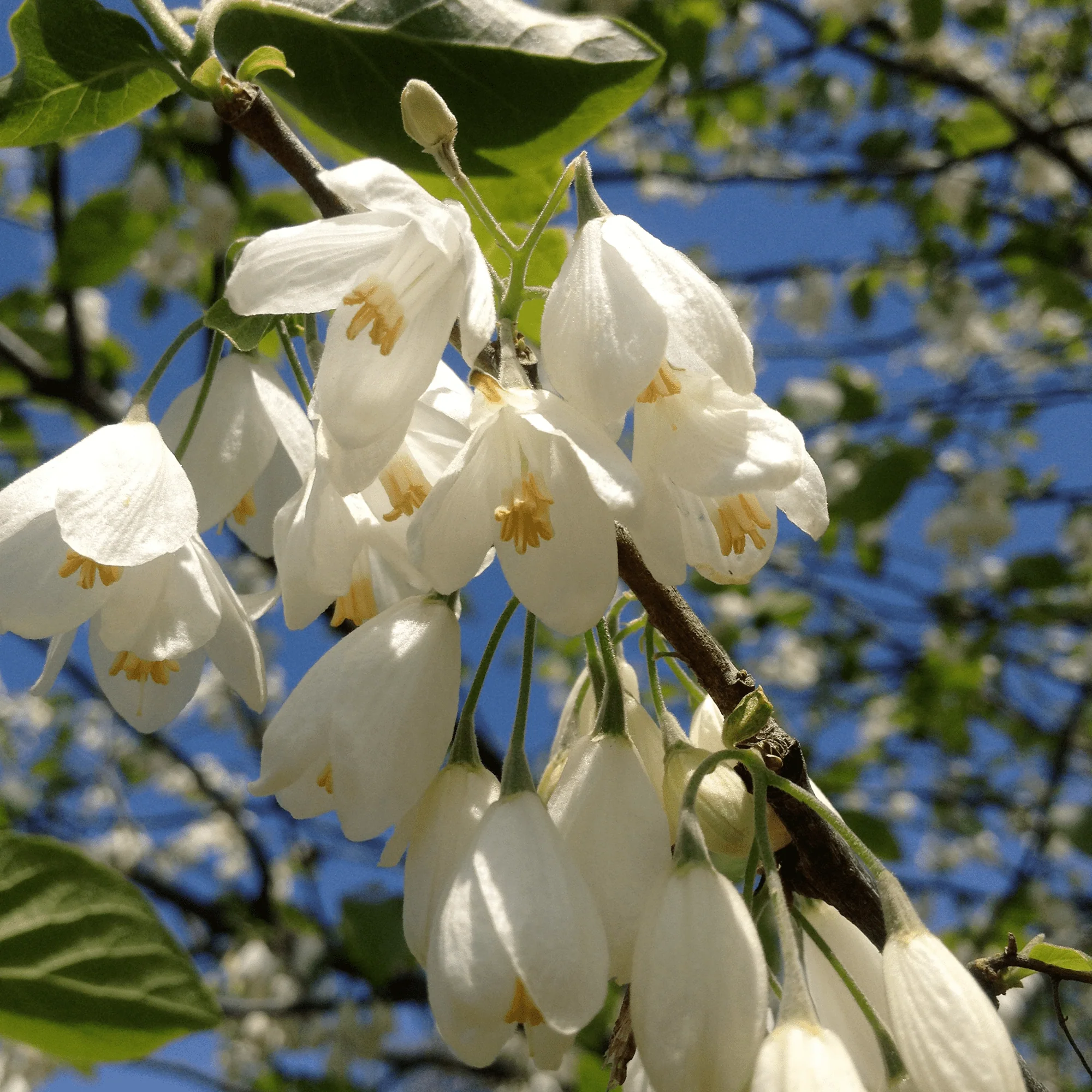
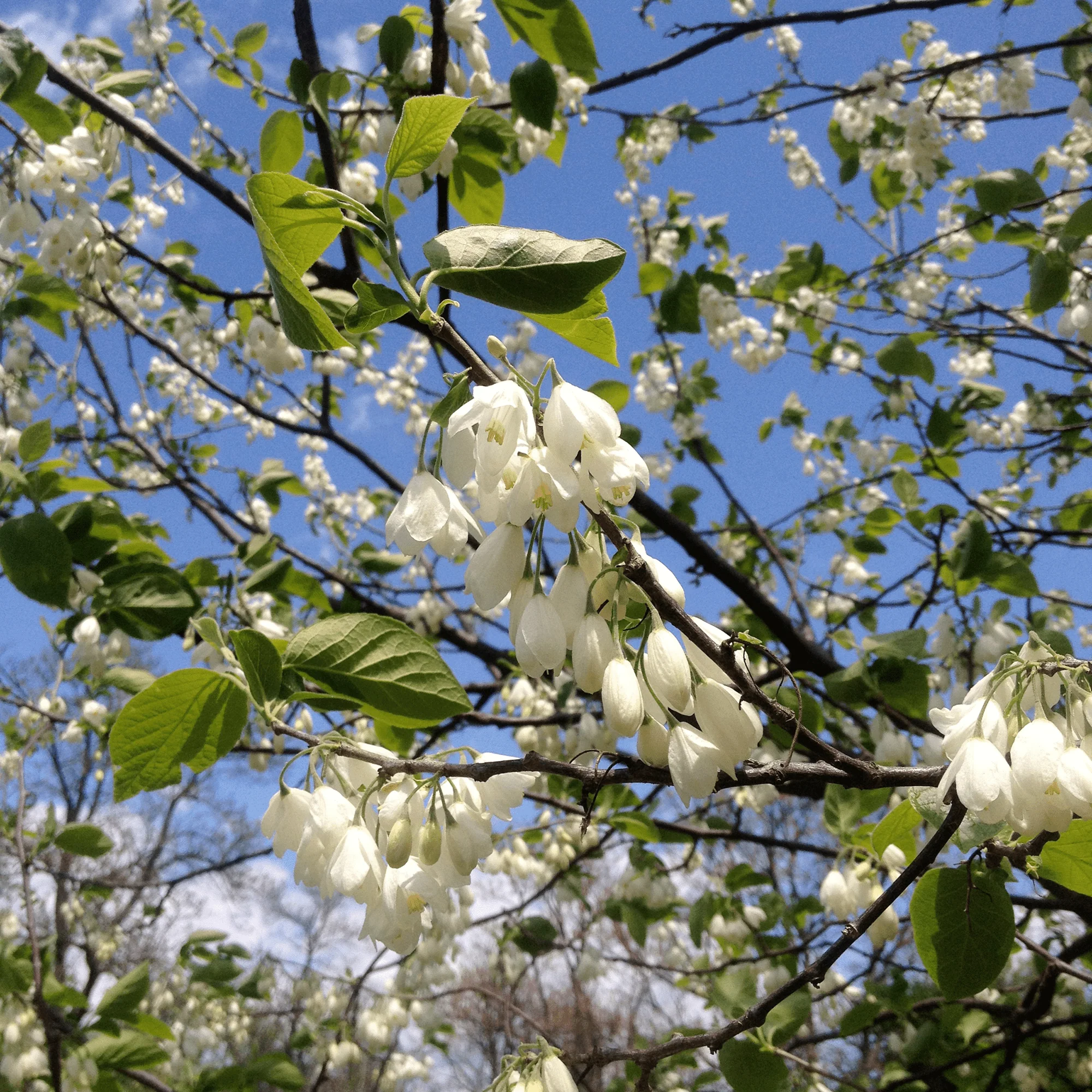
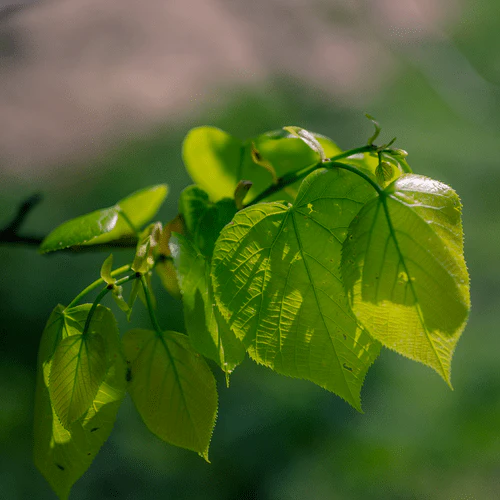
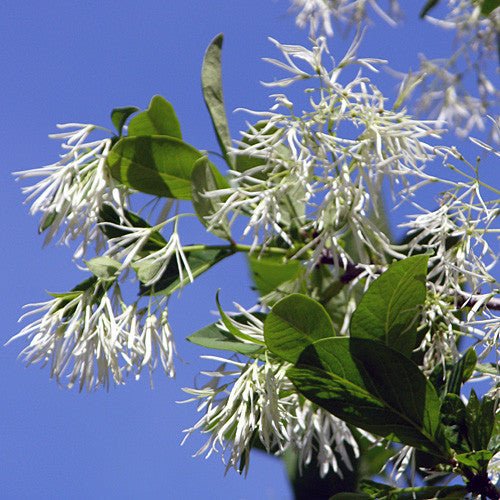
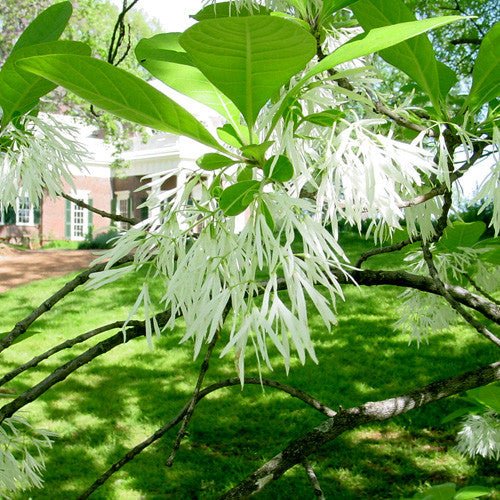
Description: Fragrant, delicate white panicles of flowers in late spring; followed by blue-black fruits; glossy, dark green foliage turns shades of yellow and brown in fall
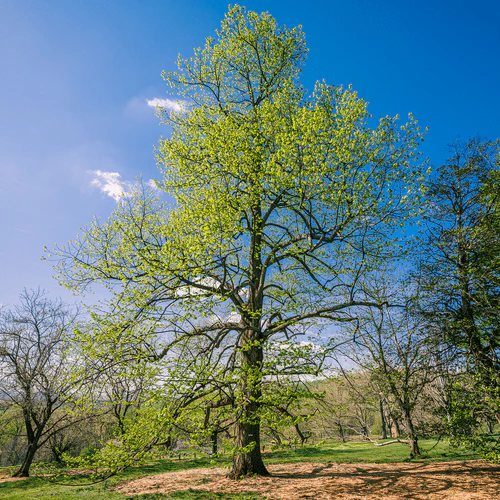
Habit: Small, spreading tree grows to 12-20 feet high and wide
Culture: Prefers full sun to part shade and moist, but well-drained soil rich in organic matter
Hardiness: Cold hardy to USDA Zone 5
Origin: North America
Attributes: Fall color, attracts birds
Jefferson documented
Henry Compton, Lord Bishop of London, appointed cleric and naturalist, John Bannister (1650-1692), to explore the flora of the Virginia colony in 1678. Among the many North American natives described by Bannister was the Fringe Tree (Chionanthus virginicus) or Old Man's Beard. In 1786, Thomas Jefferson, then living in France, wrote Philadelphia botanist John Bartram, Jr. for seeds of this showy, spring-flowering tree to share with his Parisian friends. Birds enjoy the fruits in late summer.
This species is dioecious, meaning a male and a female plant are both required for pollination and fruit set. Our plants are unsexed due to their immaturity; we recommend purchasing more than one plant to increase the likelihood of fruit production, including berries and seeds.
ne5,zone6,zone7,zone8,zone9
More Images
Fringe Tree (Chionanthus virginicus)
Hardy, deciduous, Eastern North American tree
Description: Fragrant, delicate white panicles of flowers in late spring; followed by blue-black fruits; glossy, dark green foliage turns shades of yellow and brown in fall
Habit: Small, spreading tree grows to 12-20 feet high and wide
Culture: Prefers full sun to part shade and moist, but well-drained soil rich in organic matter
Hardiness: Cold hardy to USDA Zone 5
Origin: North America
Attributes: Fall color, attracts birds
Jefferson documented
Henry Compton, Lord Bishop of London, appointed cleric and naturalist, John Bannister (1650-1692), to explore the flora of the Virginia colony in 1678. Among the many North American natives described by Bannister was the Fringe Tree (Chionanthus virginicus) or Old Man's Beard. In 1786, Thomas Jefferson, then living in France, wrote Philadelphia botanist John Bartram, Jr. for seeds of this showy, spring-flowering tree to share with his Parisian friends. Birds enjoy the fruits in late summer.
This species is dioecious, meaning a male and a female plant are both required for pollination and fruit set. Our plants are unsexed due to their immaturity; we recommend purchasing more than one plant to increase the likelihood of fruit production, including berries and seeds.
ne5,zone6,zone7,zone8,zone9
Product Information
Product Information
Shipping & Returns
Shipping & Returns
Description
Hardy, deciduous, Eastern North American tree
Description: Fragrant, delicate white panicles of flowers in late spring; followed by blue-black fruits; glossy, dark green foliage turns shades of yellow and brown in fall
Habit: Small, spreading tree grows to 12-20 feet high and wide
Culture: Prefers full sun to part shade and moist, but well-drained soil rich in organic matter
Hardiness: Cold hardy to USDA Zone 5
Origin: North America
Attributes: Fall color, attracts birds
Jefferson documented
Henry Compton, Lord Bishop of London, appointed cleric and naturalist, John Bannister (1650-1692), to explore the flora of the Virginia colony in 1678. Among the many North American natives described by Bannister was the Fringe Tree (Chionanthus virginicus) or Old Man's Beard. In 1786, Thomas Jefferson, then living in France, wrote Philadelphia botanist John Bartram, Jr. for seeds of this showy, spring-flowering tree to share with his Parisian friends. Birds enjoy the fruits in late summer.
This species is dioecious, meaning a male and a female plant are both required for pollination and fruit set. Our plants are unsexed due to their immaturity; we recommend purchasing more than one plant to increase the likelihood of fruit production, including berries and seeds.
ne5,zone6,zone7,zone8,zone9