Globe Artichoke (Cynara cardunculus var. scolymus)
Perennial kitchen garden vegetable
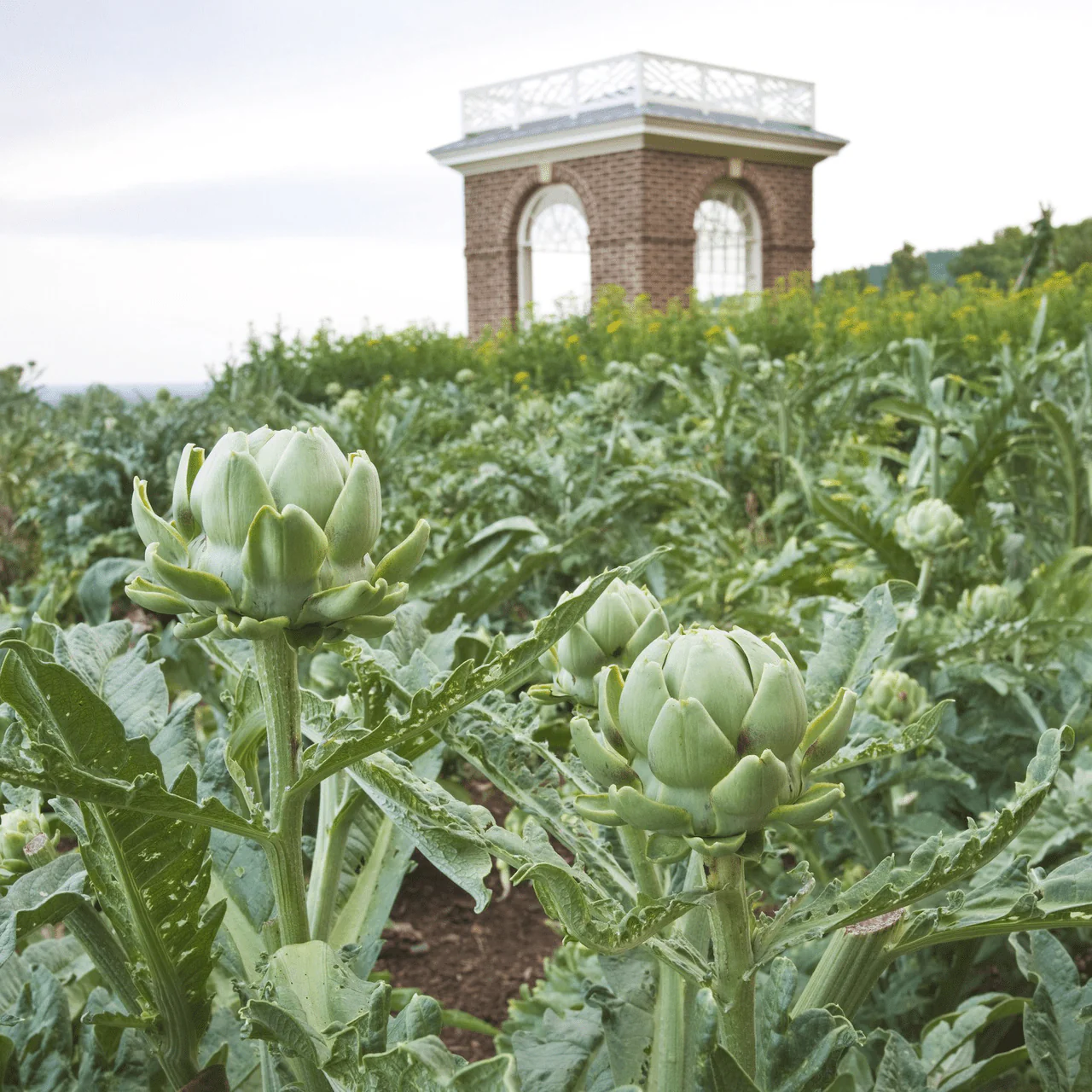
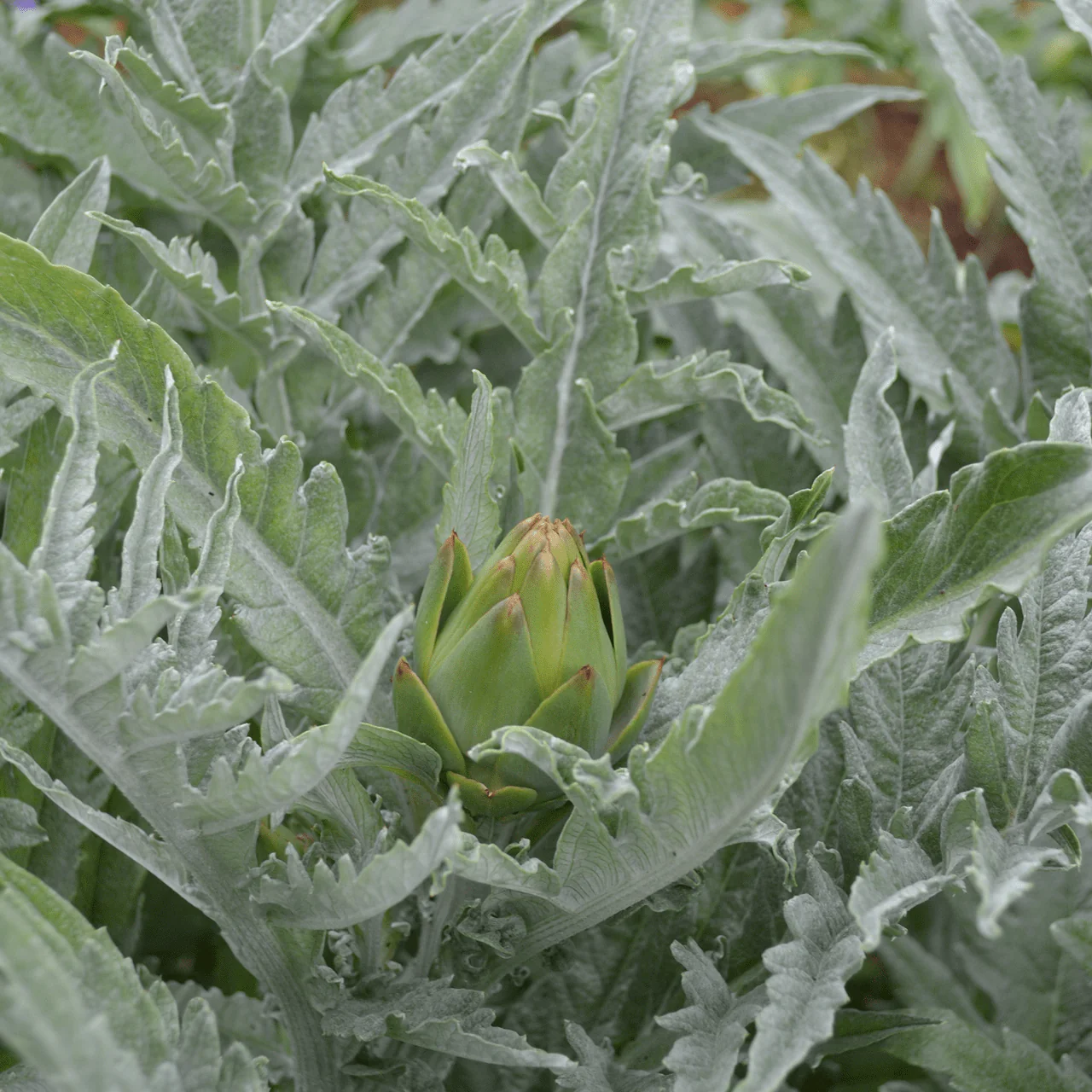
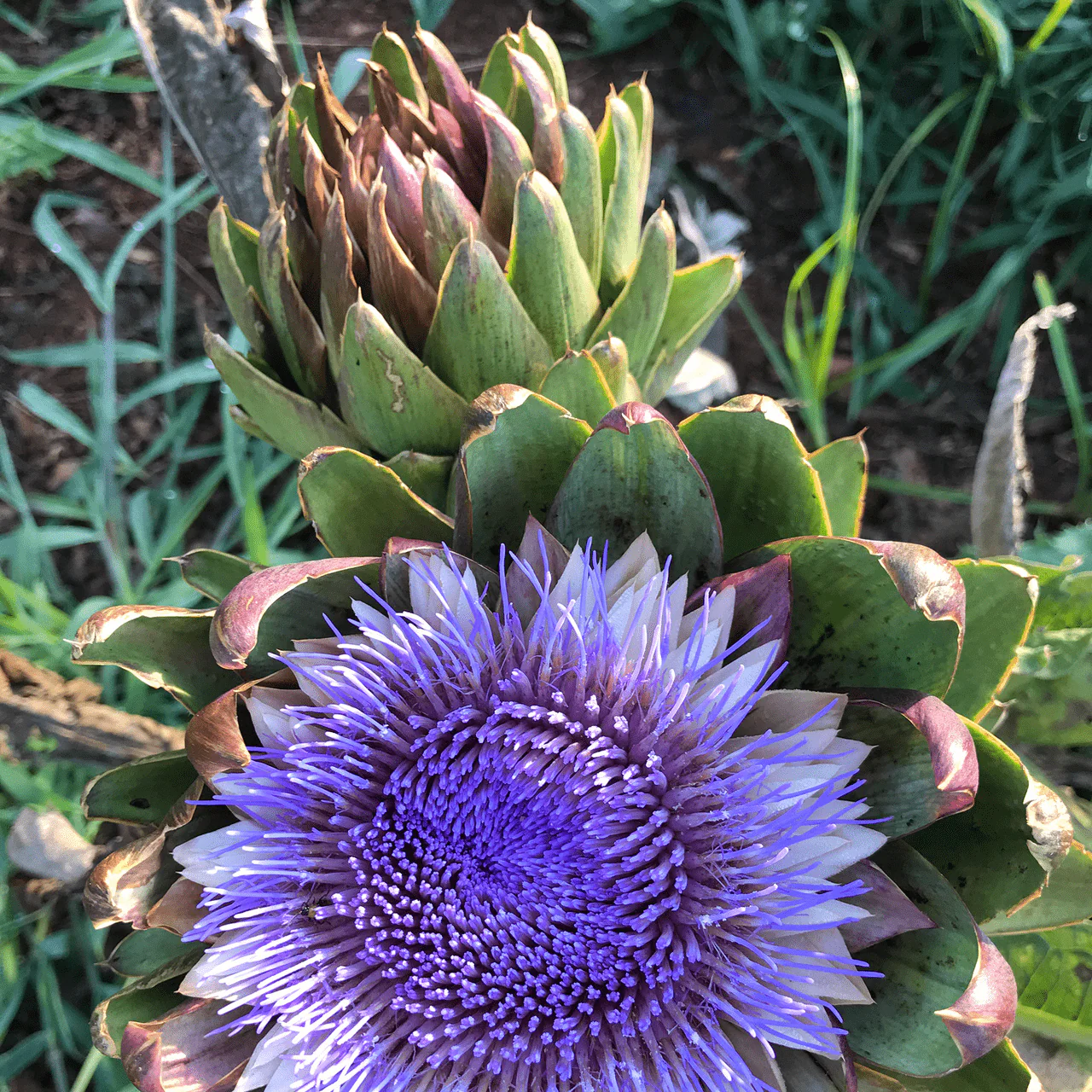
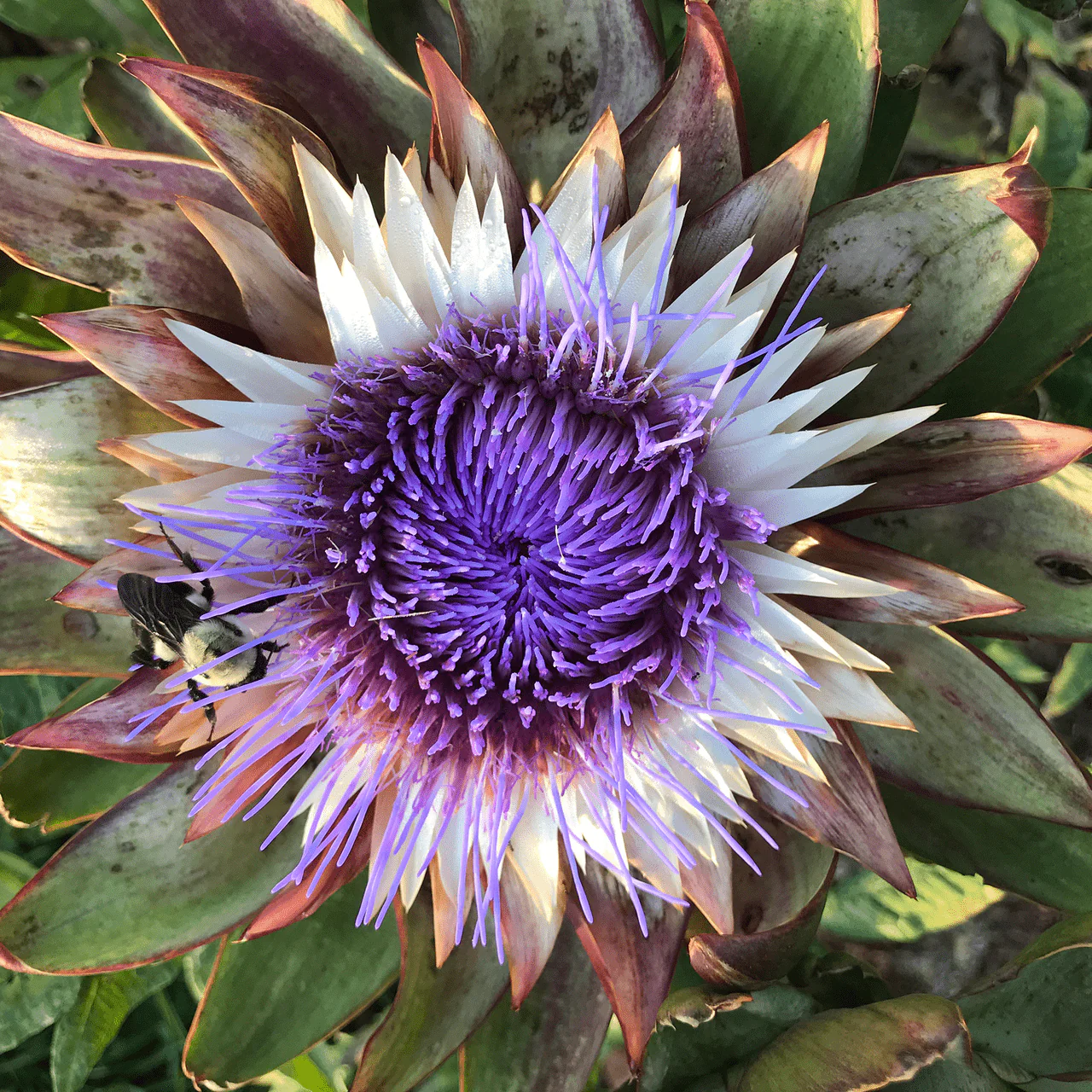
Description: Large, silvery green, deeply lobed, pointed leaves form a mound from which the flower stems arise; large, purplish, thistle-like flowers sit atop stems up to 6 feet tall; flower buds are edible
Habit: Grows from 4 to 6 feet tall and 3-4 feet wide
Culture: Prefers rich, well-prepared soil, full sun, and even moisture; for winter protection, cut back the majority of leaves, surround the crown with a tee-pee of branches, then cover all with a thick layer of straw and mulch; remove protection in early spring
Hardiness: Cold hardy to USDA Zone 8 (with protection, can be hardy to zone 7)
Origin: Southern Europe
Attributes: Edible, Attracts bees and butterflies
Jefferson Documented
The Globe Artichoke was included on one of Thomas Jefferson's first lists of vegetables grown at Monticello in 1770. His Garden Book sporadically charted the first to "come to table" and the "last dish of artichokes" from 1794 to 1825. Also known as French Artichoke, this native of southern Europe was cultivated by the Greeks and Romans. Globe Artichokes are not reliably hardy in Virginia, as Jefferson acknowledged to his Parisian friend Madame de Tessé in 1805: "we can have neither figs nor artichokes without protection from the winter."
Arrives in a 3.5" square pot.
More Images
Globe Artichoke (Cynara cardunculus var. scolymus)
Perennial kitchen garden vegetable
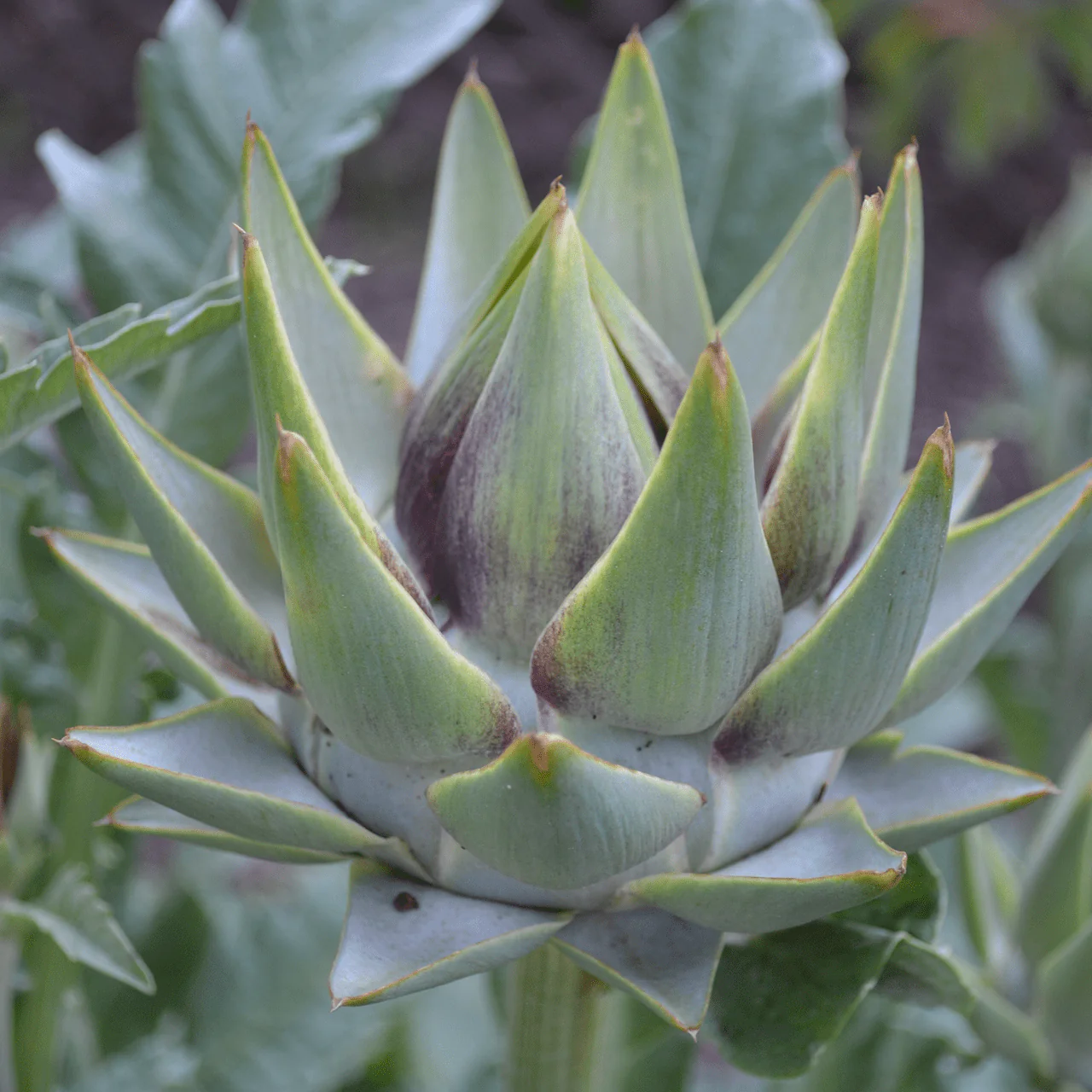
Description: Large, silvery green, deeply lobed, pointed leaves form a mound from which the flower stems arise; large, purplish, thistle-like flowers sit atop stems up to 6 feet tall; flower buds are edible
Habit: Grows from 4 to 6 feet tall and 3-4 feet wide
Culture: Prefers rich, well-prepared soil, full sun, and even moisture; for winter protection, cut back the majority of leaves, surround the crown with a tee-pee of branches, then cover all with a thick layer of straw and mulch; remove protection in early spring
Hardiness: Cold hardy to USDA Zone 8 (with protection, can be hardy to zone 7)
Origin: Southern Europe
Attributes: Edible, Attracts bees and butterflies
Jefferson Documented
The Globe Artichoke was included on one of Thomas Jefferson's first lists of vegetables grown at Monticello in 1770. His Garden Book sporadically charted the first to "come to table" and the "last dish of artichokes" from 1794 to 1825. Also known as French Artichoke, this native of southern Europe was cultivated by the Greeks and Romans. Globe Artichokes are not reliably hardy in Virginia, as Jefferson acknowledged to his Parisian friend Madame de Tessé in 1805: "we can have neither figs nor artichokes without protection from the winter."
Arrives in a 3.5" square pot.
Product Information
Product Information
Shipping & Returns
Shipping & Returns
Description
Perennial kitchen garden vegetable
Description: Large, silvery green, deeply lobed, pointed leaves form a mound from which the flower stems arise; large, purplish, thistle-like flowers sit atop stems up to 6 feet tall; flower buds are edible
Habit: Grows from 4 to 6 feet tall and 3-4 feet wide
Culture: Prefers rich, well-prepared soil, full sun, and even moisture; for winter protection, cut back the majority of leaves, surround the crown with a tee-pee of branches, then cover all with a thick layer of straw and mulch; remove protection in early spring
Hardiness: Cold hardy to USDA Zone 8 (with protection, can be hardy to zone 7)
Origin: Southern Europe
Attributes: Edible, Attracts bees and butterflies
Jefferson Documented
The Globe Artichoke was included on one of Thomas Jefferson's first lists of vegetables grown at Monticello in 1770. His Garden Book sporadically charted the first to "come to table" and the "last dish of artichokes" from 1794 to 1825. Also known as French Artichoke, this native of southern Europe was cultivated by the Greeks and Romans. Globe Artichokes are not reliably hardy in Virginia, as Jefferson acknowledged to his Parisian friend Madame de Tessé in 1805: "we can have neither figs nor artichokes without protection from the winter."
Arrives in a 3.5" square pot.