Sassafras (Sassafras albidum)
Hardy, deciduous, Eastern North American tree
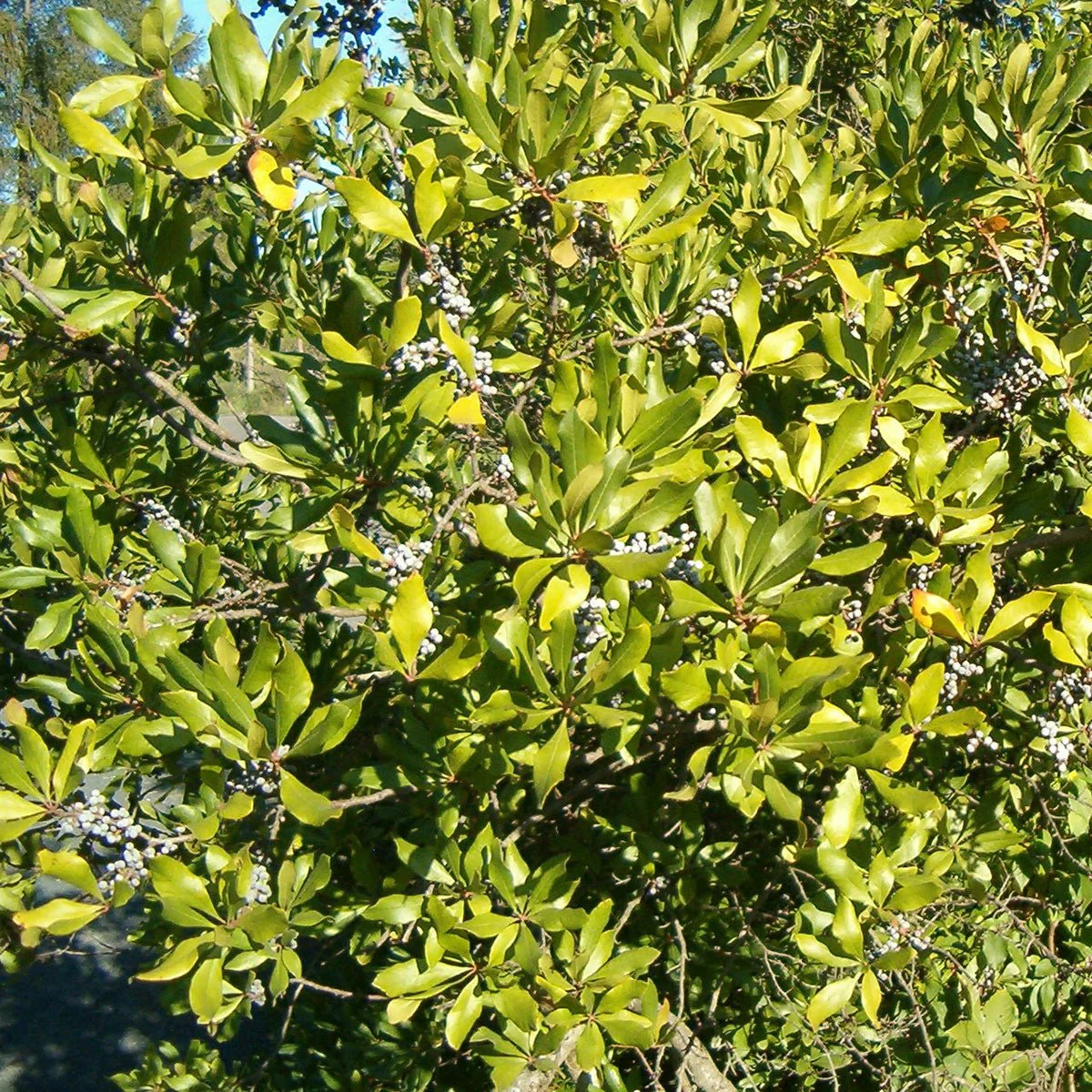
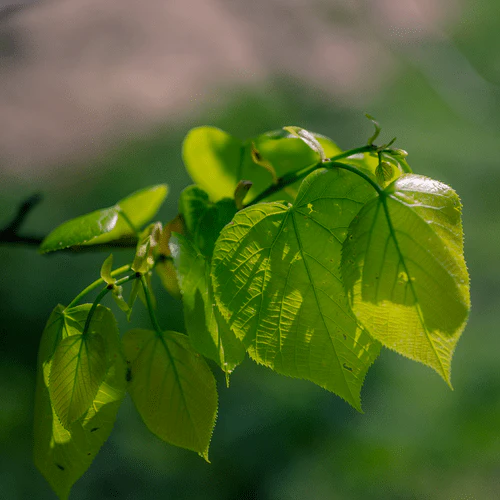
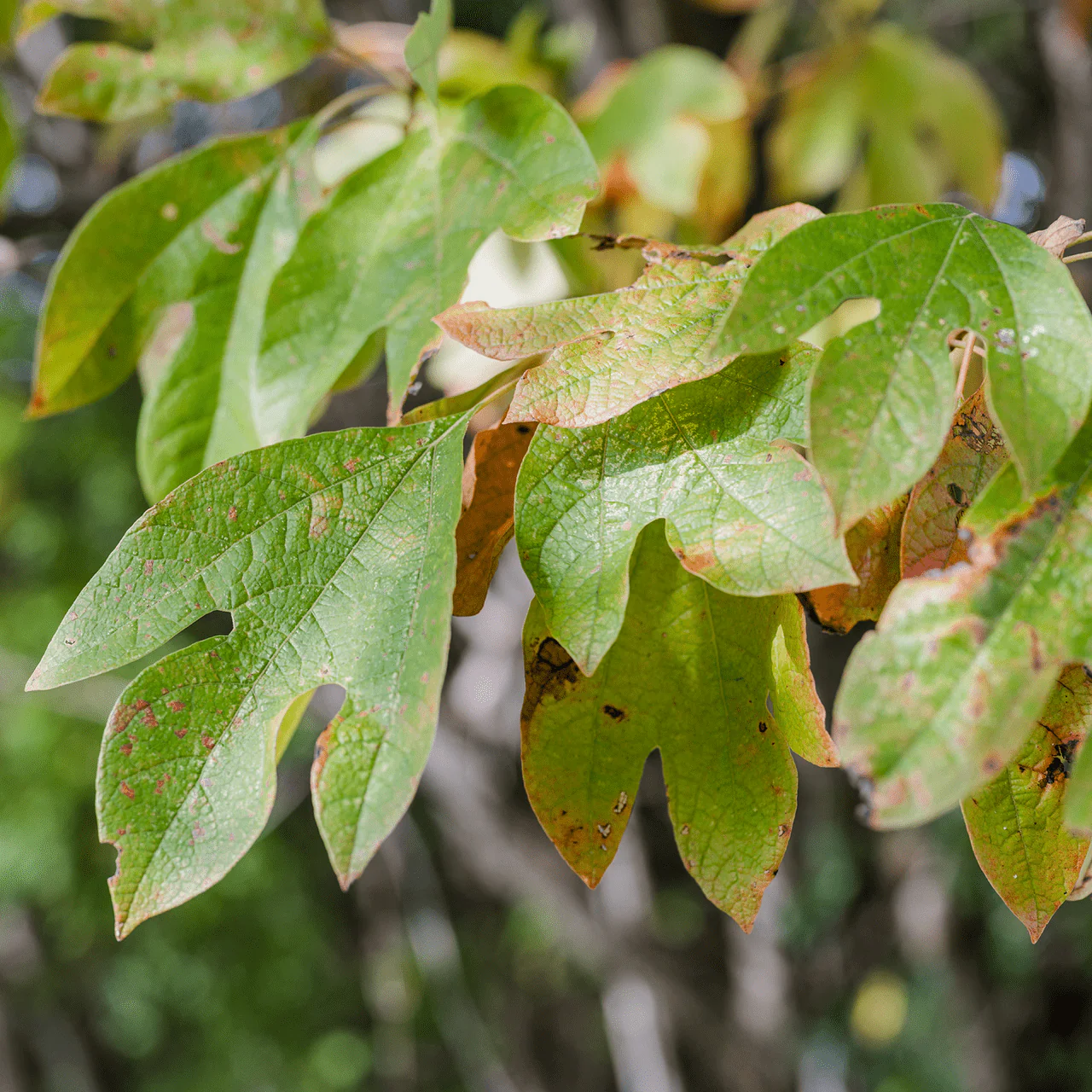
Description: Clusters of greenish-yellow flowers appear on the branch ends of female trees in spring followed by bluish-black berries in the fall; aromatic, bright green leaves have three shapes: ovate, mitten-shaped, and three-lobed; showy yellow, purple, and red fall color
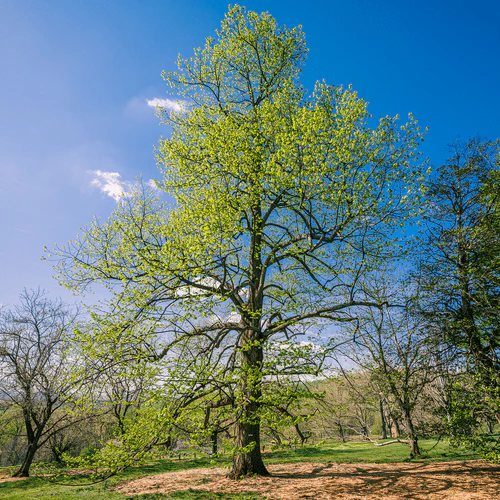
Habit: Upright, pyramidally-shaped tree grows 30-60’ high and 25-40’ wide; spreads by suckering to form colonies
Culture: Prefers full sun to part shade, and rich, moderately moist, well-drained soil, but tolerates drought and clay soil
Hardiness: Cold hardy to USDA Zone 4
Origin: Eastern North America
Attributes: Attracts birds and butterflies; Deer resistant; Drought tolerant; Fall color
Jefferson documented
Thomas Jefferson considered Sassafras an ornamental in his only published book, Notes on the State of Virginia. In 1802 President Jefferson instructed his Scottish-born gardener Robert Bailey to collect a pound of Sassafras seed to be sent to his friend Madame de Tessé in France. In a letter to Madame de Tessé from Washington, Jan. 30, 1803, Jefferson later referenced the difficulty in collecting ripe, viable seed. Native Americans and early European settlers considered Sassafras oils as medical panaceas and freely used it in tonics. Culinary uses have included sassafras tea (bark), root beer flavoring (root oil), and a gumbo-thickening agent called filé (stem pith). But more recently, sassafras oils have been banned by the USFDA for containing the carcinogenic safrole. Sassafras attracts birds and is the larval host for several butterfly species. It is also deer resistant.
This species is dioecious, meaning a male and a female plant are both required for pollination and fruit set. Our plants are unsexed due to their immaturity; we recommend purchasing more than one plant to increase the likelihood of fruit production, including berries and seeds.
More Images

Sassafras (Sassafras albidum)
Hardy, deciduous, Eastern North American tree
Description: Clusters of greenish-yellow flowers appear on the branch ends of female trees in spring followed by bluish-black berries in the fall; aromatic, bright green leaves have three shapes: ovate, mitten-shaped, and three-lobed; showy yellow, purple, and red fall color
Habit: Upright, pyramidally-shaped tree grows 30-60’ high and 25-40’ wide; spreads by suckering to form colonies
Culture: Prefers full sun to part shade, and rich, moderately moist, well-drained soil, but tolerates drought and clay soil
Hardiness: Cold hardy to USDA Zone 4
Origin: Eastern North America
Attributes: Attracts birds and butterflies; Deer resistant; Drought tolerant; Fall color
Jefferson documented
Thomas Jefferson considered Sassafras an ornamental in his only published book, Notes on the State of Virginia. In 1802 President Jefferson instructed his Scottish-born gardener Robert Bailey to collect a pound of Sassafras seed to be sent to his friend Madame de Tessé in France. In a letter to Madame de Tessé from Washington, Jan. 30, 1803, Jefferson later referenced the difficulty in collecting ripe, viable seed. Native Americans and early European settlers considered Sassafras oils as medical panaceas and freely used it in tonics. Culinary uses have included sassafras tea (bark), root beer flavoring (root oil), and a gumbo-thickening agent called filé (stem pith). But more recently, sassafras oils have been banned by the USFDA for containing the carcinogenic safrole. Sassafras attracts birds and is the larval host for several butterfly species. It is also deer resistant.
This species is dioecious, meaning a male and a female plant are both required for pollination and fruit set. Our plants are unsexed due to their immaturity; we recommend purchasing more than one plant to increase the likelihood of fruit production, including berries and seeds.
Product Information
Product Information
Shipping & Returns
Shipping & Returns
Description
Hardy, deciduous, Eastern North American tree
Description: Clusters of greenish-yellow flowers appear on the branch ends of female trees in spring followed by bluish-black berries in the fall; aromatic, bright green leaves have three shapes: ovate, mitten-shaped, and three-lobed; showy yellow, purple, and red fall color
Habit: Upright, pyramidally-shaped tree grows 30-60’ high and 25-40’ wide; spreads by suckering to form colonies
Culture: Prefers full sun to part shade, and rich, moderately moist, well-drained soil, but tolerates drought and clay soil
Hardiness: Cold hardy to USDA Zone 4
Origin: Eastern North America
Attributes: Attracts birds and butterflies; Deer resistant; Drought tolerant; Fall color
Jefferson documented
Thomas Jefferson considered Sassafras an ornamental in his only published book, Notes on the State of Virginia. In 1802 President Jefferson instructed his Scottish-born gardener Robert Bailey to collect a pound of Sassafras seed to be sent to his friend Madame de Tessé in France. In a letter to Madame de Tessé from Washington, Jan. 30, 1803, Jefferson later referenced the difficulty in collecting ripe, viable seed. Native Americans and early European settlers considered Sassafras oils as medical panaceas and freely used it in tonics. Culinary uses have included sassafras tea (bark), root beer flavoring (root oil), and a gumbo-thickening agent called filé (stem pith). But more recently, sassafras oils have been banned by the USFDA for containing the carcinogenic safrole. Sassafras attracts birds and is the larval host for several butterfly species. It is also deer resistant.
This species is dioecious, meaning a male and a female plant are both required for pollination and fruit set. Our plants are unsexed due to their immaturity; we recommend purchasing more than one plant to increase the likelihood of fruit production, including berries and seeds.